

Manager Omar López shared in the press conference after the semifinal victory against Italy that in 2017 he went through a difficult moment as a coach for Venezuela during the World Baseball Classic. Rouglas Odor, who was the hitting coach at the time, told him that he had the talent to be a first base coach, but Omar was only the batting practice pitcher.
“One day you will be the manager of this team,” Odor told him.
Nine years later, Omar López is a 10-2 manager in the World Baseball Classic, with a surreal run that, even without the best roster or many stars, led him to reign in the baseball world against powerhouses like Japan, the United States, and the Dominican Republic at loanDepot Park in Miami. In front of a roaring crowd and with the confidence of feeling like the home team, Venezuela also achieved, along the way, its first qualification for the Olympic Games as a baseball team.
López had to endure constant criticism, pressure to answer political questions, and negative comments on social media.
“I can control what is from here to here.”
After nine innings against the United States, and with a starting pitching performance by Eduardo Rodríguez, which I believe was one of the keys to the game, Venezuela defied all predictions, building an even better script for the World Baseball Classic championship game.
Rodríguez went 4.1 innings scoreless with 4 strikeouts, just 1 hit allowed, 57 pitches, and one walk. The 32 year old left hander, who has spent the last two seasons pitching with an ERA above 5.00 for the Arizona Diamondbacks, became the first left handed pitcher with 4.0 or more scoreless innings and 4 strikeouts in a WBC final.
The Venezuelans scored a run in the 3rd inning against Mets ace Nolan McLean, with a single to right field by Salvador Pérez, a walk to Ronald Acuña Jr., a wild pitch, and then a line drive hit at 97.7 mph exit velocity by Maikel García that traveled 347 feet, allowing Pérez to score from third.
Leading off the 5th inning early in the count, outfielder Wilyer Abreu extended the lead with a massive hit to center field at loanDepot Park.
Venezuela’s bullpen did an admirable job, maintaining a streak that began in the 5th inning against the Dominican Republic and extended through the 8th inning against the United States in the final. A total of 21.1 scoreless innings was broken when Bryce Harper connected on a 93 mph changeup from Andrés Machado and sent it 432 feet over the center field wall, tying the game at 2-2.
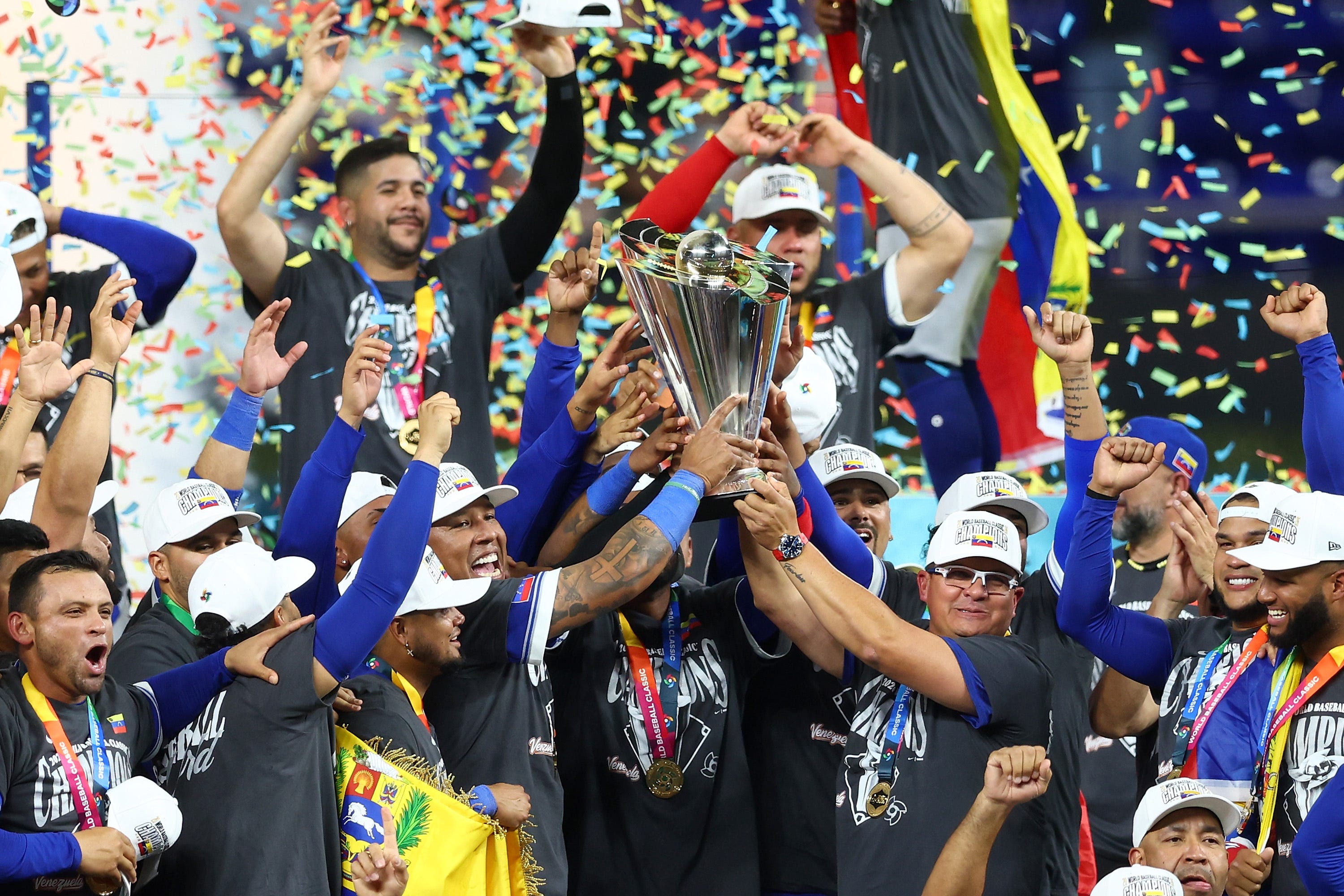
However, Venezuela had a weapon more powerful than fastballs and 110 mph exit velocity hits. They were not afraid to lose. They played as if there were no tomorrow and that can be dangerous, but on nights like last night, it becomes the doorway that opens the path to glory.
Luis Arraez worked the best walk of his career against Garrett Whitlock in the top of the 9th inning. Upon reaching first base, he was replaced by Javier Sanoja, a 5 foot 7 player, a sort of Jose Altuve type, signed for a low international bonus in his first contract and underestimated.
“From the dugout I was supporting my teammates when they told me I was going to run at first.”
Sanoja was completely loose. They talked about Whitlock’s slow movements and looked to take advantage of that. That was when Sanoja went for the steal and, despite arriving just barely safe, the United States challenged the play on replay, which ultimately confirmed the stolen base.
“We made the best decision,” Sanoja told me in center field while celebrating the world championship with his country of birth.
With Sanoja on second base and the United States unable to use Mason Miller, their best closer, Eugenio Suárez stayed calm and connected on a Whitlock changeup in a 3 2 count, placing it perfectly between left field and center field.
“To be able to hit that double and give the victory to a country that deserves it and a team that never gave up, I have to put that first. God has been good.”
When Suárez reached second base, he looked up to the sky and said several words, but there was one that stood out more than any other: “Thank you.”
Suárez became only the second player to deliver a go ahead hit in the 9th inning or later in a World Baseball Classic championship game since 2006. The first was Ichiro Suzuki in the 10th inning against South Korea on March 23, 2009.
After this sequence of events, intangible at the time, a 26 year old reliever from the Chicago Cubs named Daniel Palencia entered the 9th inning with the mission of recording three outs that would represent the greatest sporting victory in Venezuela’s history. He struck out Kyle Schwarber with a 98.5 mph fastball, then forced Gunnar Henderson into a ground ball to third base with another fastball over 97 mph, and the final batter, Roman Anthony, was overpowered with a 99.7 mph pitch, marking Palencia’s 7th strikeout at 99 plus mph in the World Baseball Classic, leading that category.
Venezuela reached the highest point in its sporting history. A country extremely talented at playing this game, with incredible growth over the last 15 years and an increasing ability to manage and guide that talent, achieved glory at loanDepot Park in Miami, which felt more like a Venezuelan stadium than one in the United States.
Manager Omar López said through tears about half an hour later that he longed to be in his hometown of Maiquetía. Victor Martinez, the assistant manager, and Miguel Cabrera, the hitting coach, were crying uncontrollably in a crowd of journalists, family members, and tournament organizers in the outfield area of loanDepot Park.
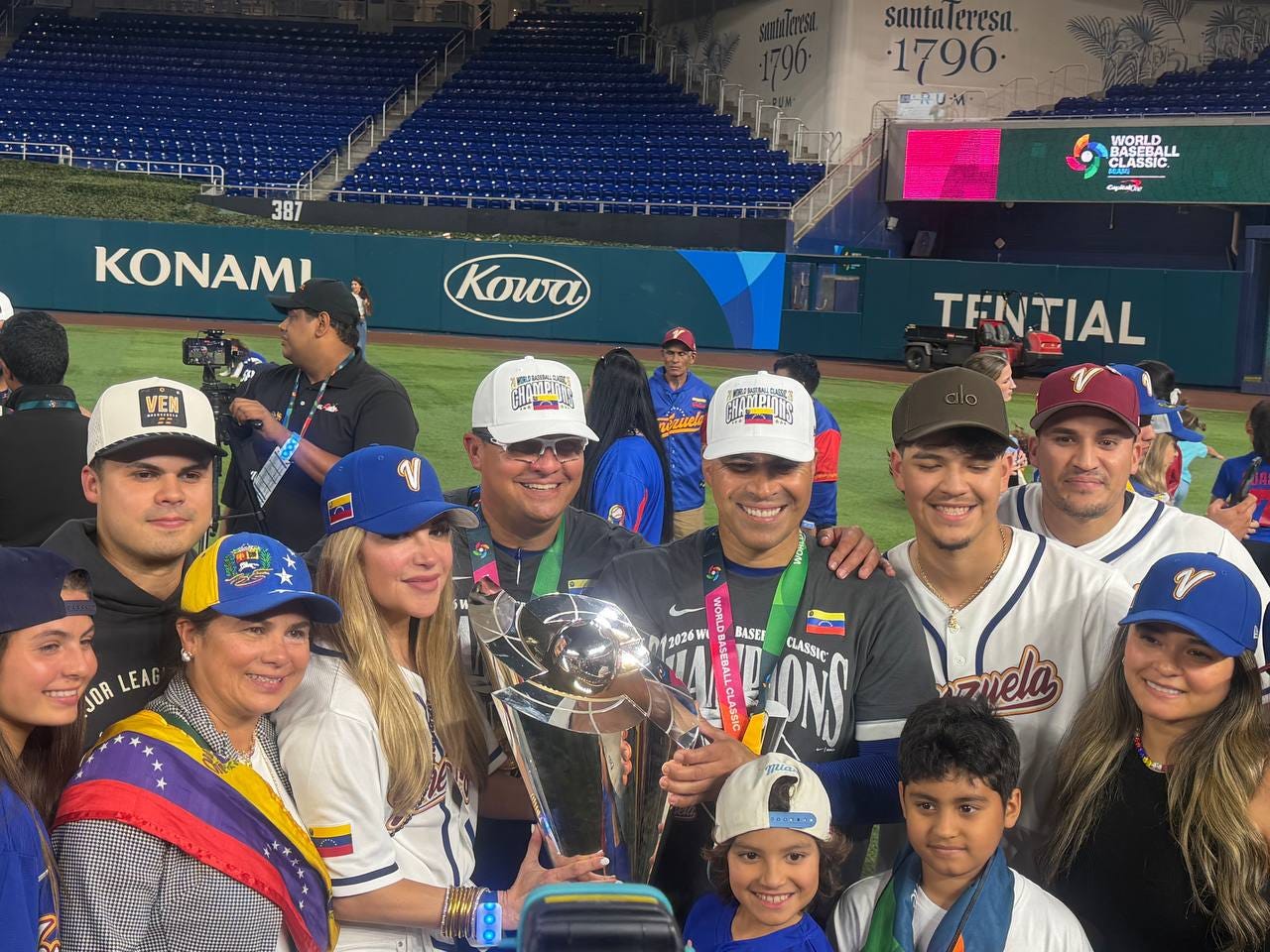
Without stars like Jose Altuve, Jesus Luzardo, or Robert Suarez, the Venezuelan team pushed through all the difficulties that a team not expected to be champion usually faces. It is not the path anyone plans for, those perfect formulas that come together within a game and bring results.
This Venezuelan championship in the World Baseball Classic 2026 proves that baseball still is and will continue to be a game that does not believe in stars or logic.
Maybe they were not players of the caliber of Aaron Judge, Paul Skenes, or Alex Bregman. Maybe they did not go through the best paths to get where they did. Venezuela was not supposed to achieve that greatness. But there is no such thing as what is supposed to happen or not. Baseball is a game that does not believe in assumptions.
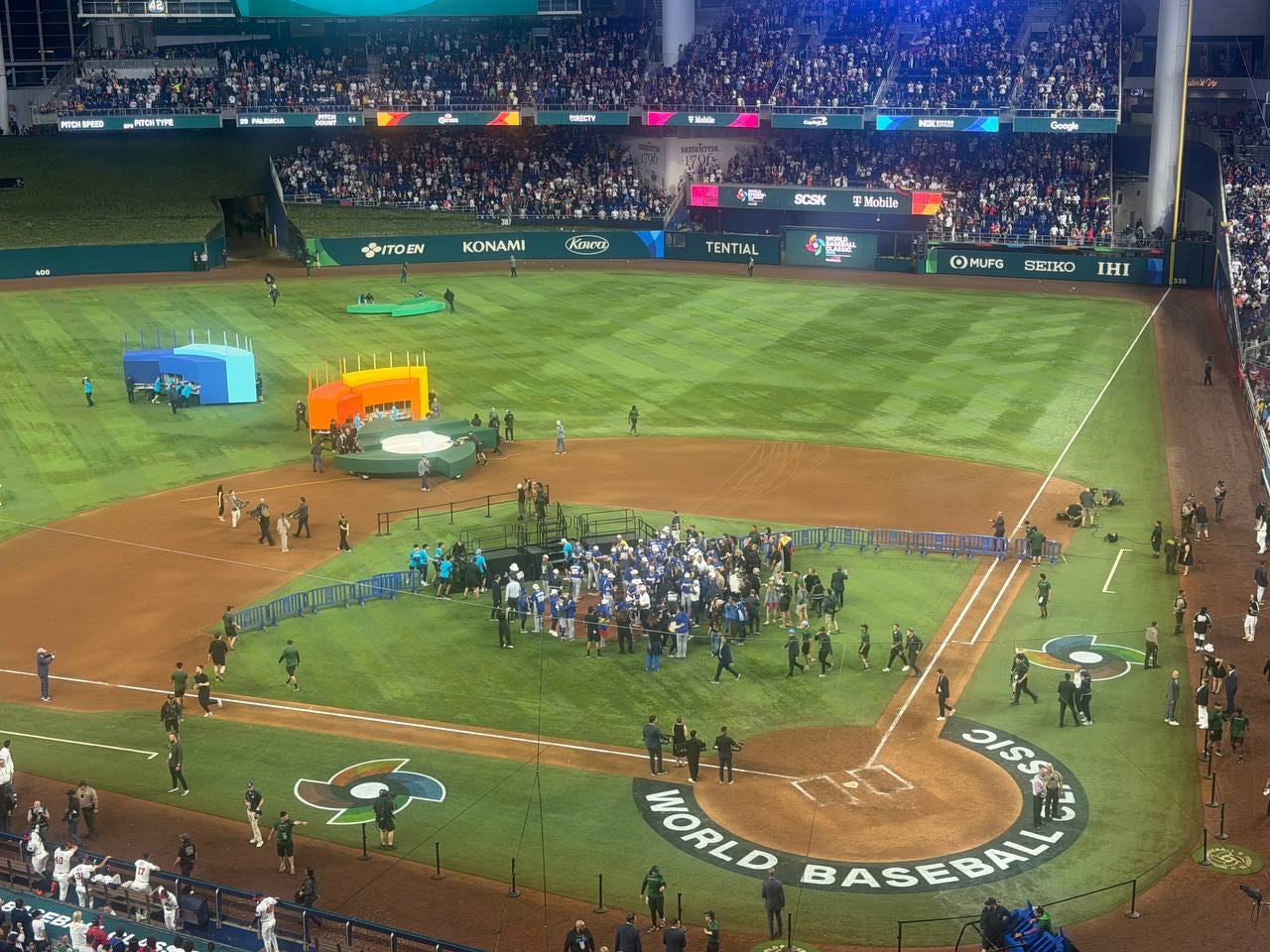
Why do you think you achieved this feat, I asked Luis Arraez an hour later on the field.
“We did it because we played united, we played with passion, with respect, and look, God’s timing is perfect, and God never keeps anyone’s effort.”
A total of 397 players born in Venezuela signed during the 2024 to 2025 international period, and more than 200 have already signed since January 15. Venezuelan talent will continue to enter and develop within the MLB system.
The glory achieved on March 17, 2026, in Little Havana in Miami is a cause and effect of all the concentrated talent and the immense faith of a nation.
Incredible the success they had without the stars you mentioned. Such a fun squad. Great tournament all around.