

These days, the debate is growing over players who confirm their presence at the World Baseball Classic (WBC) versus those who choose to stay in Spring Training. Multiple factors influence both decisions: representing your country and its flag, or preparing properly for a successful MLB season, which already has a grueling seven-month schedule.
After speaking with several organizations and their development departments, I’ll summarize here how the WBC is viewed within the system and what the approach of many organizations looks like.
Cases like Carlos Correa, Bo Bichette, and Tatsuya Imai will be analyzed.
MLB Teams’ Approach to the World Baseball Classic
For organizations, the decision for a player to participate in the WBC is entirely personal. Choosing to play or not does not directly affect a player’s chances of making the roster, nor are there any penalties. What really matters is performance within the team, how the player prepares, and what they show during Spring Training.
Every player’s situation is different. A player with no injury history over the past two seasons is treated differently than one with three stints on the injured list in 2025. Likewise, a player who has signed with a new franchise, like Tatsuya Imai or Bo Bichette, and is unfamiliar with the facilities or a new culture, faces a different adjustment curve than those who have signed long-term extensions and already have advanced knowledge and trust within their organization.
Staying in Spring Training
If a player decides to stay, there are important advantages from a development standpoint, often an underappreciated aspect of the WBC discussion. The tournament is an international spectacle full of excitement and adrenaline; as I witnessed the first phase in 2023 in Taichung, Taiwan, and then the quarterfinals, semifinals, and final at LoanDepot Park in Miami
Many players leave for the WBC, which creates opportunities for others in Spring Training—more at-bats, more playing time, and more interaction with the MLB staff, which is positive from an organization standpoint. This means a player can stand out and demonstrate progress more directly. Spring Training also allows for individual work, constant coaching, and access to all team resources, which is not always possible during an international tournament.
Going to the WBC
I’ve sometimes seen on social media that teams are “against” the WBC. However, after speaking with various development staff at MLB complexes, the team perspective is that playing for your country is a unique experience and a personal source of pride, not only for the player but also for their families.
Teams understand and deeply respect that representing your country can be important to the player and their family. Choosing to go will not have negative repercussions within the organization.
However, and this is an important point of friction: the WBC is primarily a competitive tournament whose main goal is to win—not to develop individual skills for the MLB season. Coaching time and at-bats are not guaranteed during the 20–25 days a player spends with their national team, meaning the focus is far more competitive than developmental.
If You Go to the WBC, Report Early
A common recommendation from teams to players heading to the WBC is to arrive early at Spring Training, even before it officially starts.
This extra time allows for high-quality work, repeated practice, and close contact with coaches and teammates. While unpaid, this time is highly valued by staff, as it demonstrates commitment and professionalism, and often translates into better performance during the season.
New Team, Reduced Chances
With the era of multi-million-dollar contracts, players who have signed with new teams and are eligible to play for their countries in the WBC now face reduced chances of participating for two main reasons: 1) adapting to a new facility and team, and 2) injury risk without having played an official game with their new MLB club.
In this context, Japanese pitcher Tatsuya Imai with the Astros and Bo Bichette, recently signed with the New York Mets, are examples. While the devotion of Japanese players to their national team is well known, Imai declined to participate in this WBC in order to acclimate to his new team. For Bichette, according to multiple sources close to him, it was a family dream to play in this WBC for his mother’s native country, where his brother Dante is also on Brazil’s roster. However, signing with the Mets put him in a difficult position, and the decision was made to continue recovering from his left knee injury suffered in September 2025.
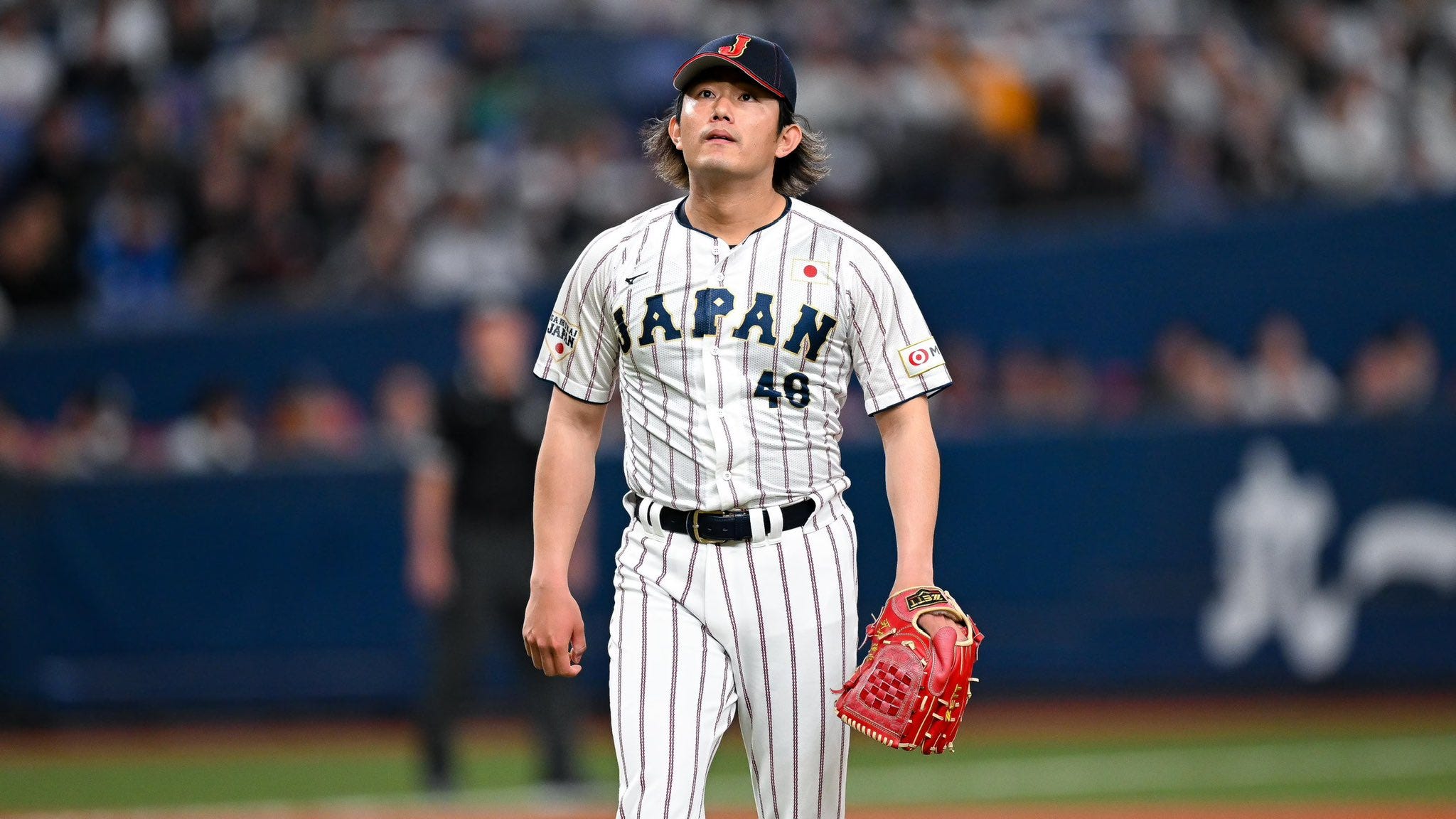
Other free agents who have signed with new organizations could also fall into this category, including Edwin Diaz and Ranger Suarez soon, or potentially Framber Valdez, Eugenio Suarez, and Luis Arraez when they sign. Not every case is the same, though. For example, Cody Ponce, Kazuma Okamoto, and Munetaka Murakami all signed multi-year deals with new teams and are, so far, confirmed to participate in the WBC in March.
The simple fact remains: being on a new team usually brings clearly reduced chances of WBC participation.
Injuries and Insurance Policies
Insurance protecting players during the WBC is essential for MLB and MiLB teams to allow their stars to participate without assuming the full financial risk. These policies cover a player’s guaranteed salary, whether they miss a few games or the entire season due to a WBC-related injury.
If a player is injured and it is determined that the injury occurred during the WBC, the insurance covers the salary for the time missed. To help identify WBC-related injuries, players must undergo physical exams upon entry and exit. This allows doctors and teams to distinguish preexisting injuries from those incurred during the tournament.
Coverage has traditionally been managed by Team Scotti, based in Pittsburgh, Pennsylvania, a national insurance broker founded by John A. Scotti, who has decades of experience in insurance and providing unique solutions and employee benefit programs to MLB, MiLB, and their affiliates. In 2019, Team Scotti was acquired by NFP, an Aon company, and has continued to play a critical role in risk management for the major league

Recent Examples
Unlike other players protected by WBC insurance, Carlos Correa from the Houston Astros is not insured for the tournament. This means any injury he suffers would be a direct risk for the franchise, who would have to cover his $31 million salary in 2026 while he is unavailable.
A similar case occurred in 2023 with Miguel Cabrera, in the final year of his $248 million contract with $32 million remaining before retirement. The Detroit Tigers made the unusual decision to waive Cabrera’s insurance requirement and assume the financial risk if he were injured in the tournament. Naturally, they knew Miguel would not play every day. Cabrera had 2 games and 9 at-bats, facing Puerto Rico and Nicaragua, both as designated hitter.
Other teams have refused to take the same risk if the insurer does not provide coverage, Miguel Rojas with the Los Angeles Dodgers, Jose Altuve with the Houston Astros, and Carlos Narváez with the Boston Red Sox, are some of these cases.
Players who need insurance are those on the 40-man roster. Free agents or players from other leagues do not require it because they are not part of MLB organizations.
According to sources close to the topic, players are categorized by “chronic condition” (repeated injuries over years, multiple 60-day IL stints), “intermediate condition” (multiple 10-day IL stints over 2–3 seasons), and “low-risk condition.”
Ultimately, the decision of participating or not in the WBC is a personal one.
Would you sacrifice your future as an MLB player or take the chance to take your home country to baseball’s biggest glory?
I will say, if I were a baseball franchise, I would not want my players in it.